Vera Schwarz · 2 September 2026
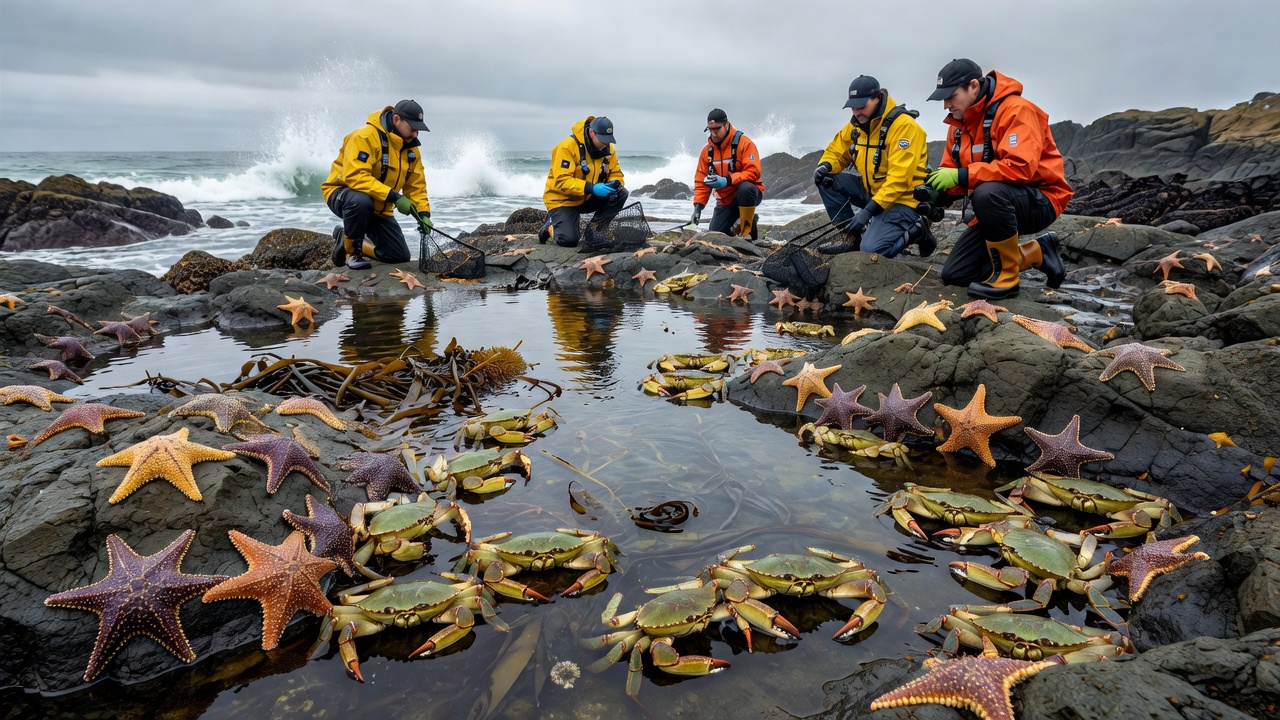
Scientists from several institutions are actively tracking the movement and impact of invasive species within Oregon's tidepool environments. This initiative comes as concerns grow over the balance of marine life in these unique coastal habitats. Tidepools serve as critical nurseries for many species, making any disruption particularly concerning for overall ocean health. Key species under observation include the Japanese shore crab and the European green crab. These organisms have shown remarkable adaptability, allowing them to thrive in new environments where they were not originally present. Their introduction is believed to stem from international shipping activities.
Additional monitoring reveals that other invaders such as the Asian sea squirt are also establishing footholds, further complicating efforts to maintain native biodiversity in these dynamic intertidal areas.
Tracking Techniques Employed by Researchers
Field teams conduct regular assessments using quadrat sampling to quantify populations. They also utilize underwater cameras and environmental DNA sampling to detect presence even when individuals are not visible. Data is compiled into databases shared among collaborating universities and government agencies. This collaborative approach ensures comprehensive coverage of the extensive Oregon coastline. Findings from the first year of the project reveal that invasive populations are expanding northward, possibly due to warming ocean currents. Native predators appear less effective at controlling these newcomers, leading to shifts in community structures within the tidepools.
Potential Consequences and Mitigation Strategies
The ecological ramifications could include reduced biodiversity and altered nutrient cycling in the intertidal zones. For instance, overgrazing by invasive crabs might diminish algae cover, affecting herbivores and the entire food web. Economic impacts on local fisheries are also being evaluated as part of the study. To counter these threats, experts advocate for enhanced monitoring protocols and rapid response teams capable of removing invasive individuals before they establish large colonies. Public involvement through reporting sightings via mobile apps is encouraged to broaden the surveillance network. Long-term success depends on international cooperation to prevent further introductions. Continued research will focus on modeling future scenarios under different climate conditions to better prepare for potential changes in species distributions along the Pacific Northwest coast.